
Mobile Tire Service vs. a Tire Shop: Which Is Better?
When you need new tires, a tire repair, or help with a flat, the traditional option has always been to drive to a tire shop and wait for service. Today, mobile tire service gives drivers another choice: bringing professional tire service directly to their home, workplace, fleet yard, or roadside location.
So which option is better?
The answer depends on what you need, how quickly you need it, and how much you value your time. For many drivers and businesses, mobile tire service can eliminate much of the inconvenience associated with a traditional tire shop.
What Is Mobile Tire Service?
Mobile tire service is essentially a tire shop that comes to you.
A properly equipped mobile tire service vehicle can perform many of the same services you would normally expect from a brick-and-mortar tire shop, including:
Tire replacement
Mounting and balancing
Flat tire repair
Valve stem replacement
TPMS service
Tire inspections
Fleet tire maintenance
Roadside tire service
Instead of driving to a shop, checking in, and waiting for your vehicle, the technician performs the work at your location.
For customers in the Jacksonville area, this can be especially convenient for busy families, commuters, commercial fleets, RV owners, trailers, and businesses that cannot afford unnecessary vehicle downtime.
Convenience: Mobile Tire Service Wins
Convenience is probably the biggest difference between mobile tire service and a traditional tire shop.
A typical shop visit may involve driving to the shop, waiting for your vehicle to be brought into a service bay, waiting for the work to be completed, and then driving back.
Even a relatively simple tire replacement can take a large part of your morning or afternoon once travel and waiting time are included.
With mobile tire service, you can often continue doing what you were already doing while your tires are serviced.
Your vehicle can be worked on while you are:
At home
At work
Managing your business
Staying at a campground
Waiting at a jobsite
Dealing with a roadside tire problem
You still need to allow enough time for the technician to complete the work safely, but you are no longer spending that entire time sitting in a waiting room.
Tire Shops Usually Have More Equipment
Traditional tire shops still have advantages.
A large tire shop may have multiple service bays, alignment machines, lifts, large inventories of tires, and several technicians working simultaneously.
That makes a tire shop a better choice when your vehicle needs services beyond tires, such as:
Wheel alignments
Suspension repairs
Major mechanical repairs
Certain specialty wheel repairs
Extensive diagnostics
Mobile tire service is not designed to replace every automotive repair facility.
Instead, it provides an alternative for customers who specifically need tire-related service without the inconvenience of visiting a shop.
What About Tire Installation?
For standard tire replacement, there may be very little difference in the actual service performed.
Professional mobile tire equipment allows technicians to remove your old tire, mount the replacement tire, balance the wheel, and reinstall it on the vehicle at your location.
The important factor is not whether the work happens inside a building or inside a mobile service vehicle.
What matters is whether the technician has the proper equipment, training, and procedures to perform the job correctly.
Mobile Tire Repair Can Be Especially Helpful
A flat tire does not always require a new tire.
If the puncture is in a repairable area and the tire is otherwise in safe condition, a professional repair may allow the tire to remain in service.
The problem is getting the damaged vehicle to a tire shop.
If the tire will not hold air, driving on it can damage the tire beyond repair and may damage the wheel as well.
Mobile tire service allows the tire to be inspected and, when appropriate, repaired without requiring the customer to drive on a damaged tire.
If the tire cannot safely be repaired, a replacement can often be installed instead.
Mobile Tire Service Can Reduce Fleet Downtime
The difference becomes even more significant for commercial fleets.
When a fleet vehicle goes to a tire shop, the business loses more than the time required to change the tire.
Someone may need to:
Drive the vehicle to the shop.
Wait for service.
Return the vehicle to the business.
Reschedule work that could not be completed while the vehicle was unavailable.
Multiply that across several vans, trucks, or service vehicles and tire maintenance can become a significant operational interruption.
Mobile fleet tire service allows many tire services to be performed where the vehicles are already parked.
Businesses can schedule tire replacements, repairs, and inspections around their operating schedule instead of sending vehicles away from the property.
For companies that depend on their vehicles every day, reducing downtime can be just as important as the price of the tire itself.
What About Emergencies?
This is another area where mobile tire service has a major advantage.
A traditional tire shop only helps if you can get the vehicle there.
If you have a flat tire at your home, workplace, jobsite, or on the road, mobile tire service can come directly to the vehicle.
Depending on the situation, a mobile technician may be able to repair the existing tire or install a replacement.
That can eliminate the need to arrange a tow simply because of a tire problem.
Is Mobile Tire Service More Expensive?
Sometimes.
Mobile service may cost more than the lowest advertised installation price at a high-volume tire store because the service provider is bringing the equipment and technician directly to the customer.
However, comparing only the installation price does not tell the whole story.
You should also consider the value of:
Travel time
Waiting time
Lost work
Fleet downtime
Towing costs
Transportation to and from a shop
The convenience of having the service performed at your location
For many customers, paying for mobile service is less about finding the absolute cheapest installation and more about avoiding several hours of inconvenience.
When Is a Traditional Tire Shop Better?
A tire shop may be the better option when:
You need a wheel alignment.
You need significant suspension or steering repairs.
You want to browse a large tire inventory in person.
Your vehicle requires specialized equipment that cannot reasonably be carried in a mobile service vehicle.
You are already at a repair facility for additional mechanical work.
Traditional tire shops remain an important part of the automotive service industry.
Mobile tire service simply gives customers another option.
When Is Mobile Tire Service Better?
Mobile tire service is particularly useful when:
You do not want to spend hours at a tire shop.
Your vehicle has a flat and should not be driven.
You need tires installed while you are at work.
You have multiple fleet vehicles that need service.
Your RV or trailer is difficult to take to a tire shop.
You need tire service at home.
Vehicle downtime costs your business money.
For these situations, having the tire shop come to the vehicle can make considerably more sense than bringing the vehicle to the tire shop.
Mobile Tire Service in Jacksonville, Florida
Jacksonville is a large city, and driving across town for tire service can easily turn a relatively simple job into a major interruption to your day.
Veterans Mobile Tire Service provides professional mobile tire service throughout the Jacksonville area, bringing tire installation, tire repair, balancing, TPMS service, and roadside assistance directly to customers.
We work with passenger vehicles, pickup trucks, commercial vehicles, fleets, trailers, RVs, and other vehicles that need tire service without the traditional tire-shop experience.
Whether your vehicle is sitting in your driveway, parked at your workplace, located at a fleet yard, or dealing with a tire problem on the road, our goal is simple:
Bring the tire service to you.
So, Which Is Better?
Neither option is automatically better for every situation.
If you need extensive mechanical work, an alignment, or specialized shop equipment, a traditional tire shop may be the right choice.
But if you simply need professional tire service and would rather avoid driving across town and sitting in a waiting room, mobile tire service offers a much more convenient alternative.
For busy drivers and businesses, the biggest advantage is simple: your day does not have to stop just because your vehicle needs tires.
Need Mobile Tire Service in Jacksonville?
Veterans Mobile Tire Service provides convenient on-site tire service throughout the Jacksonville area.
Whether you need a tire replaced, a flat repaired, new tires installed, or help with a fleet vehicle, we can bring the equipment directly to you.
Contact Veterans Mobile Tire Service today to schedule service or request roadside assistance.
Are Your Tires Ready for Florida Rain? 7 Signs It May Be Time to Replace Them
Driving in Jacksonville means dealing with plenty of sunshine—but it also means sudden downpours, standing water, and wet roads. When the rain starts coming down, your tires are one of the most important safety systems on your vehicle.
Tires that seem perfectly fine on a dry road can become a much bigger problem when the pavement is wet.
At Veterans Mobile Tire Service, we help drivers throughout Jacksonville and surrounding areas inspect, repair, and replace tires without having to spend hours waiting at a traditional tire shop.
Here are seven signs your tires may not be ready for Florida's rainy roads.
1. Your Tread Is Getting Low
Tire tread is designed to move water away from the contact patch between your tire and the road.
As tread wears down, the tire becomes less effective at clearing that water. This can reduce wet-weather traction and increase the risk of hydroplaning.
The legal minimum tread depth may not always be the best indicator of when a tire should be replaced. If you regularly drive in heavy rain, replacing worn tires before they reach the absolute minimum can provide better wet-road performance.
Not sure how much tread you have left? A professional tire inspection can measure tread depth across the entire tire and identify uneven wear.
2. You See Cracks or Dry Rot
Florida's heat and sunlight can be hard on rubber.
Over time, tires may develop small cracks around the sidewall or between the tread blocks. This deterioration is commonly called dry rot.
A tire can still have plenty of tread remaining while the rubber itself has begun to deteriorate.
Cracking is especially important to watch for on:
Vehicles that are not driven frequently
Trailers
RVs and motorhomes
Work trucks
Older second vehicles
Visible cracking does not automatically mean every tire needs immediate replacement, but significant deterioration should always be inspected.
3. Your Tires Are Wearing Unevenly
Uneven tire wear can reduce the amount of tread actually contacting the road.
Common wear patterns include:
Excessive wear on one edge
Wear on both outside edges
Excessive center wear
Cupping or scalloped wear
Different tread depths across the same axle
Uneven wear may be related to tire pressure, suspension components, alignment, driving conditions, or other mechanical issues.
Replacing a badly worn tire solves the immediate tire problem, but determining why it wore unevenly can help prevent the replacement tire from doing the same thing.
4. Your Vehicle Feels Less Stable in the Rain
Pay attention to how your vehicle behaves when roads are wet.
If your vehicle suddenly feels less planted, loses traction more easily, or requires more steering correction during rain, worn tires may be contributing to the problem.
You may particularly notice this when:
Accelerating from a stop
Driving through standing water
Braking
Changing lanes
Traveling at highway speeds
Wet-weather handling often exposes tire problems that are much less noticeable on dry pavement.
5. You Frequently Have to Add Air
A tire that repeatedly loses pressure should not simply be topped off indefinitely.
Slow leaks can be caused by several issues, including:
Nails or screws
Valve stem leaks
Bead leaks
Wheel corrosion or damage
Previous tire damage
Many tread-area punctures can be professionally repaired using an internal plug-patch combination repair, depending on the location and condition of the damage.
Sidewall and certain shoulder-area damage generally cannot be safely repaired and may require tire replacement.
6. Your Tires Are Getting Old
Mileage isn't the only thing that wears out a tire.
Rubber changes as it ages, even when the vehicle is driven very little. That is why checking the tire's manufacturing date can be just as important as checking the tread.
The tire's DOT code contains information identifying when it was manufactured.
Older tires deserve additional attention—especially on vehicles that spend long periods sitting outside in Florida's heat.
This is particularly important for RV owners, trailer owners, and drivers with low-mileage vehicles.
7. You Notice Bulges, Bubbles, or Sidewall Damage
A bulge or bubble in the sidewall can indicate internal tire damage.
This is very different from normal cosmetic wear.
If you notice a significant bulge, exposed cords, deep cuts, or other major sidewall damage, avoid continuing to drive on the tire unnecessarily. Internal structural damage can make the tire unsafe.
When you're unsure, having the tire inspected where the vehicle is parked can eliminate the need to drive on a questionable tire just to reach a shop.
Don't Wait for a Rainstorm to Find Out Your Tires Are Worn
One of the worst times to discover that your tires have poor traction is during a Jacksonville afternoon downpour.
A quick tire inspection can identify:
Low tread
Uneven wear
Tire damage
Incorrect tire pressure
Dry rot
Repairable punctures
Tires that may need replacement
And you don't necessarily have to take your vehicle to a tire shop to have it handled.
Mobile Tire Service in Jacksonville, FL
Veterans Mobile Tire Service brings tire service directly to your home, workplace, fleet yard, roadside location, or other convenient location.
Our mobile tire services include:
Mobile tire replacement
Tire mounting and balancing
Flat tire repair
Plug-patch tire repair
TPMS service
Valve stem service
Roadside tire assistance
Fleet tire service
RV and trailer tire service
We serve customers throughout Jacksonville, Duval County, Nassau County, and surrounding Northeast Florida areas, with additional service available in parts of Southeast Georgia.
Instead of spending part of your day sitting in a tire shop, let the tire shop come to you.
Need your tires inspected, repaired, or replaced? Contact Veterans Mobile Tire Service to schedule mobile tire service in Jacksonville.
Suggested SEO Settings
SEO Title:
Are Your Tires Safe for Florida Rain? | Jacksonville Tire Service
Meta Description:
Are your tires ready for Jacksonville's heavy rain? Learn 7 signs your tires may need repair or replacement and how mobile tire service can help.
URL Slug:
/blog/tires-safe-florida-rain
Primary Keyword:
Jacksonville tire service
Secondary Keywords:
mobile tire service Jacksonville, mobile tire replacement Jacksonville, tire repair Jacksonville FL, worn tires, tire tread, Florida rain tires, mobile tire repair Jacksonville
Suggested Image Alt Text:
Mobile tire service inspecting tire tread in Jacksonville Florida
Mobile Tire Service in Jacksonville: A Faster, Easier Way to Handle Tire Problems
A flat tire, damaged tire, or worn-out set of tires can throw off your entire day. Traditionally, getting tire service means driving to a shop, waiting for an open bay, sitting in a waiting room, and then driving back home or to work.
Mobile tire service changes that.
Instead of taking your vehicle to the tire shop, the tire shop comes to you.
Whether you're at home, at work, or dealing with a tire problem somewhere around Jacksonville, mobile tire service can save time and make tire replacement and repair much more convenient.
What Is Mobile Tire Service?
Mobile tire service brings professional tire equipment directly to your location.
Depending on the service needed, a mobile tire technician can handle many of the same jobs you would normally visit a traditional tire shop for, including:
Tire replacement
Mounting and balancing
Flat tire repair
Valve stem replacement
TPMS service
Tire inspections
Fleet tire service
Roadside tire assistance
This allows many tire problems to be handled without having your vehicle towed or spending hours waiting at a shop.
Save Time Without Sitting at a Tire Shop
One of the biggest advantages of mobile tire service is convenience.
Instead of rearranging your schedule around a tire appointment, you can have your tires serviced while you're doing something else.
For example, your vehicle can be serviced while you're:
At home
At work
Managing your business
Taking care of your family
Waiting at a jobsite
Managing a fleet of vehicles
For busy drivers and businesses, eliminating a trip to the tire shop can save a significant amount of time.
Mobile Tire Replacement
If your tires are worn out, damaged, or simply ready for replacement, mobile tire replacement allows the entire job to be completed at your location.
The technician can remove your existing tires, install the new tires, balance the wheels, and reinstall them on your vehicle.
You get the convenience of a tire shop without having to drive across town and wait for service.
Mobile Flat Tire Repair
Not every flat tire requires replacement.
If the puncture is located in a repairable area of the tread and the tire is otherwise in good condition, it may be possible to safely repair the tire.
A professional tire inspection can determine whether the tire can be repaired or should be replaced.
Driving on a damaged or underinflated tire can cause additional internal damage, so having the tire inspected as soon as possible is important.
Tire Service at Your Home
Having tires installed at home is one of the easiest ways to maintain your vehicle.
You can schedule service and continue with your day while the technician handles the tire work outside.
For families with multiple vehicles, mobile tire service can also make it easier to service more than one vehicle without making several trips to a tire shop.
Tire Service at Your Workplace
Mobile tire service can also come directly to your workplace.
Instead of taking time off or spending your lunch break at a tire shop, your vehicle can often be serviced while you continue working.
When you're ready to leave, the tire service is already complete.
A Better Option for Fleet Vehicles
Mobile tire service can be especially valuable for businesses.
Every hour a company vehicle spends sitting at a tire shop is time that vehicle isn't producing revenue.
On-site fleet tire service can help businesses reduce downtime by servicing vehicles at their facility or jobsite.
Routine inspections can also identify problems such as:
Low tire pressure
Uneven tire wear
Low tread depth
Tire damage
Valve stem problems
Tires approaching replacement
Finding these issues early can help prevent unexpected roadside breakdowns.
Mobile Tire Service for More Than Just Cars
Mobile tire service isn't limited to passenger vehicles.
Depending on the equipment available, mobile tire technicians may also service:
Pickup trucks
Work vans
Cargo vans
Box trucks
Trailers
RVs
Commercial fleet vehicles
This makes mobile tire service particularly useful for vehicles that are inconvenient to take to a traditional tire shop.
When Should You Replace Your Tires?
You should regularly inspect your tires for signs of wear or damage.
Common reasons to replace a tire include:
Low tread depth
Cracks in the rubber
Sidewall damage
Bulges or bubbles
Uneven tread wear
Repeated air loss
Tire vibration
Older tire age
Damage that cannot be safely repaired
If you're unsure whether a tire needs replacement, having it professionally inspected is the safest option.
Why Jacksonville Drivers Are Choosing Mobile Tire Service
Jacksonville is a large city, and driving across town for tire service can easily become a several-hour process.
Mobile tire service eliminates much of that inconvenience.
Instead of driving to the shop, waiting for service, and driving back, you can have professional tire service brought directly to you.
For busy families, working professionals, commercial drivers, and fleet operators, that convenience can make a major difference.
Need Mobile Tire Service in Jacksonville?
Veterans Mobile Tire Service provides convenient mobile tire service throughout the Jacksonville area.
Whether you need a tire replaced, a flat repaired, or help maintaining your fleet, professional tire service can come directly to your location.
Skip the waiting room and get your tires serviced where your vehicle already is.
Mobile tire service makes tire care simpler, faster, and more convenient.

Why Mobile Tire Service Is the Easier Choice for Everyday Drivers
A flat tire, worn tread, or unexpected tire problem can disrupt your entire day. Traditionally, getting tire service means driving to a shop, waiting for an available appointment, arranging transportation, and sitting in a waiting room while the work is completed. Mobile tire service offers a more convenient alternative by bringing professional tire care directly to your home, workplace, or roadside location.
Tire Service That Comes to You
The biggest advantage of mobile tire service is convenience. Instead of rearranging your schedule around a tire shop, a trained technician arrives at your location with the equipment needed to complete the job.
Mobile tire services may include:
Tire installation
Mounting and balancing
Flat tire repair
Tire replacement
Valve stem service
TPMS service
Tire inspections

For many drivers, this means they can continue working, taking care of their family, or relaxing at home while their vehicle is being serviced.
Less Time Spent Waiting
A traditional tire shop may require you to wait behind several other customers, even when you have an appointment. Mobile tire service eliminates the drive to the shop and reduces the amount of time you spend waiting.
Your vehicle remains at your location, and the technician focuses on completing the requested service. Once the work is finished, your vehicle is ready to drive without an additional trip back to the shop.
Helpful When Your Tire Is Unsafe to Drive
Driving on a damaged, severely worn, or underinflated tire can make the problem worse and may create a safety risk. A mobile tire technician can inspect and service the tire where the vehicle is located.
This is especially useful when:
A tire is completely flat
The tire has visible sidewall damage
The tread is separating
The vehicle is vibrating or shaking
A spare tire is unavailable
The driver does not feel comfortable driving to a shop
When a tire may be unsafe, bringing the tire shop to the vehicle is often the better option.
Convenient for Busy Families
Everyday drivers already have full schedules. Work, school, appointments, errands, and family responsibilities can make it difficult to spend several hours at a tire shop.
Mobile tire service allows parents and busy professionals to schedule tire work at a more convenient location. Tires can be replaced in a driveway, office parking lot, or another approved location without disrupting the entire day.
Professional Equipment Without the Traditional Shop
A properly equipped mobile tire service is more than basic roadside assistance. Professional mobile tire vans can carry tire-changing equipment, computerized balancing machines, air compressors, jacks, tire repair supplies, and diagnostic tools.
This allows many of the same services offered by a traditional tire shop to be performed on-site. Drivers receive professional tire installation without having to travel to a physical store.
Better Preparation for Road Trips
Before taking a long trip, it is important to inspect your tires for tread wear, cracking, improper inflation, punctures, and other problems. Mobile tire service makes it easier to have your tires checked or replaced before leaving town.
A professional inspection can help identify issues before they turn into a roadside breakdown. This is particularly important before family vacations, holiday travel, or extended highway driving.
A Practical Option for Multiple Vehicles
Households with several vehicles may find mobile tire service especially useful. Instead of taking each vehicle to a shop separately, tire services can often be scheduled at the same location.
This can simplify maintenance for families with cars, trucks, SUVs, trailers, or recreational vehicles.
Choosing a Mobile Tire Service
Before scheduling service, look for a mobile tire company that is properly insured, uses professional equipment, clearly explains its pricing, and has strong customer reviews.
You should also ask whether the company provides mounting and balancing, what vehicle types it services, and whether it can supply the tire brand and size you need.
Mobile Tire Service in Jacksonville
Veterans Mobile Tire Service brings professional tire installation, balancing, repair, and replacement directly to drivers throughout Jacksonville and surrounding areas. Whether your vehicle is at home, at work, or stranded on the roadside, our mobile tire shop is equipped to help get you back on the road.
Skip the tire shop waiting room and have your tire service completed at a location that works for you.
Need tire service in Jacksonville? Contact Veterans Mobile Tire Service to schedule professional mobile tire service at your home, workplace, or roadside location.
When Should You Replace Your Tires? 7 Warning Signs Every Driver Should Know
Your tires are the only parts of your vehicle that make direct contact with the road. Their condition affects braking, steering, fuel efficiency, ride quality, and your ability to maintain control during heavy rain or an emergency maneuver.
Unfortunately, many drivers wait until a tire is completely bald or goes flat before considering replacement. Tires usually provide several warning signs before they become unsafe. Knowing what to look for can help you avoid unexpected breakdowns, poor traction, and costly vehicle damage.
Here are seven common signs that it may be time to replace your tires.
1. Your Tread Is Too Low
Tire tread channels water away from the tire and helps your vehicle maintain traction. As the tread wears down, your stopping distance can increase, especially on wet roads.
The minimum recommended tread depth is 2/32 of an inch. Tires that have reached this level should be replaced.
You can perform a quick check using a penny:
Place a penny into one of the main tread grooves.
Turn the penny so Abraham Lincoln’s head points down.
If you can see the top of Lincoln’s head, the tread is approximately 2/32 of an inch or less.
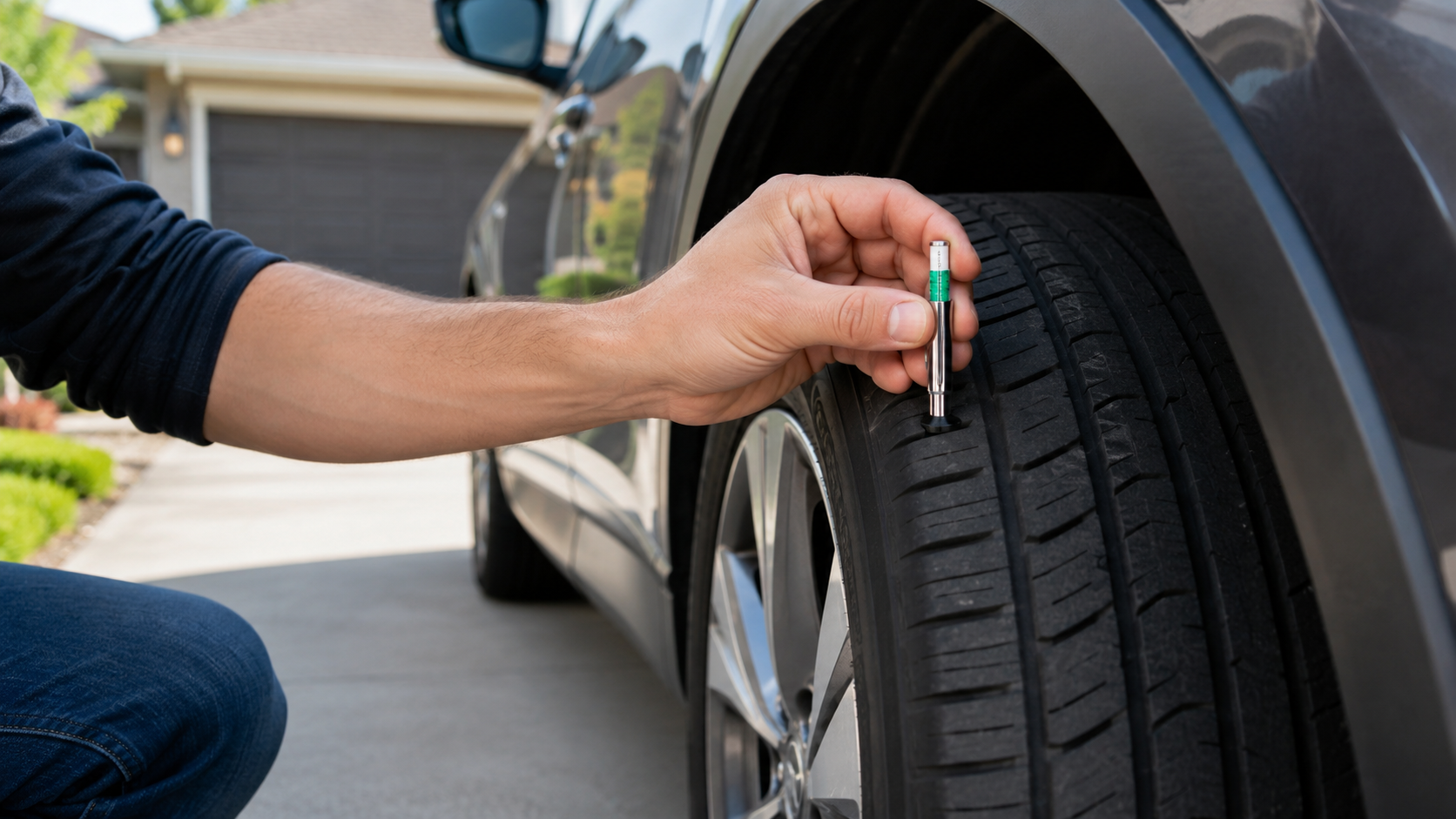
Tires also have built-in tread-wear bars inside the grooves. When these bars become level with the surrounding tread, the tire has reached its replacement point.
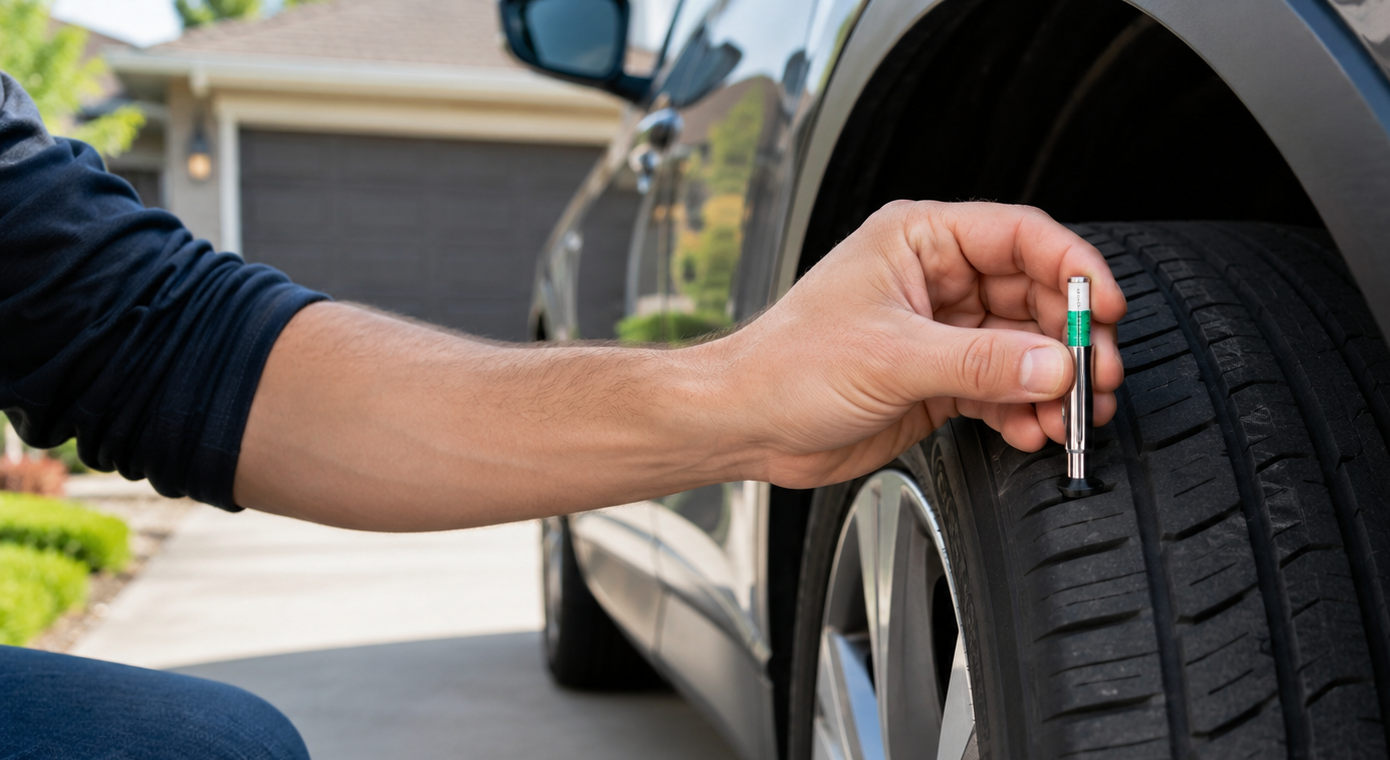
In areas that experience frequent heavy rain, replacing your tires before they reach the absolute minimum can provide better wet-weather traction.
2. You See Cracks, Cuts, or Bulges
Inspect both the tread and sidewalls for visible damage. Warning signs include:
Deep cuts or punctures
Cracking or dry rot
Bubbles or bulges
Exposed cords or belts
Pieces of tread separating from the tire
A bulge or bubble usually indicates damage inside the tire. This type of damage cannot be safely repaired and may lead to a sudden blowout.
The National Highway Traffic Safety Administration recommends discontinuing the use of tires showing physical damage such as cuts, cracks, bulges, or irregular wear.
Do not drive on a tire with a visible bulge or exposed internal material. Install the spare tire or arrange professional roadside service.
3. Your Tires Are Wearing Unevenly
Tire tread should wear relatively evenly across the surface. If one section is significantly more worn than another, there may be a problem with:
Wheel alignment
Tire pressure
Suspension components
Tire rotation intervals
Wheel balancing
Wear along both outer edges can indicate underinflation. Excessive wear through the center may indicate overinflation. Wear on only one side commonly points to an alignment or suspension problem.
Replacing the tire without correcting the underlying issue may cause the new tire to wear out prematurely.
4. Your Tires Are Losing Air Repeatedly
Tire pressure naturally changes with temperature, but a tire that requires air every few days or weeks may have a leak.
Common causes include:
A nail or screw in the tread
A leaking valve stem
Corrosion around the wheel bead
A cracked wheel
Damage to the tire’s inner liner
Some tread-area punctures can be repaired with a proper internal patch-and-plug combination. However, punctures in the sidewall or shoulder generally require tire replacement.
A tire pressure warning light should not be ignored. The Tire Pressure Monitoring System is designed to alert you when a tire is already significantly underinflated, but it does not replace routine checks with an accurate tire-pressure gauge.
5. Your Vehicle Vibrates While Driving
A vibration through the steering wheel, seat, or floor can sometimes be caused by a wheel that needs balancing. It can also indicate:
Internal tire separation
An out-of-round tire
Uneven tread wear
A bent wheel
Suspension or alignment problems
A vibration that begins suddenly or becomes worse as your speed increases should be inspected promptly. Continuing to drive could cause additional tire, wheel, or suspension damage.
6. Your Tires Have Lost Wet-Weather Traction
You do not need to wait for the tread to become completely bald before replacing your tires.
You may notice that your vehicle:
Slides more easily during rain
Takes longer to stop
Spins the tires during normal acceleration
Feels unstable through standing water
Activates traction control more frequently
These symptoms can indicate that the remaining tread is no longer moving water away effectively.
Because Jacksonville and Northeast Florida can experience sudden, heavy rainfall, dependable wet-road traction is especially important. Tires that still appear usable in dry weather may perform poorly when the roads become wet.
7. Your Tires Are Getting Old
Tires deteriorate over time, even when they still have visible tread. Heat, sunlight, storage conditions, maintenance, and infrequent use can all affect how quickly a tire ages. NHTSA notes that tire aging is a particular concern in warmer southern regions and for vehicles that are not driven regularly.
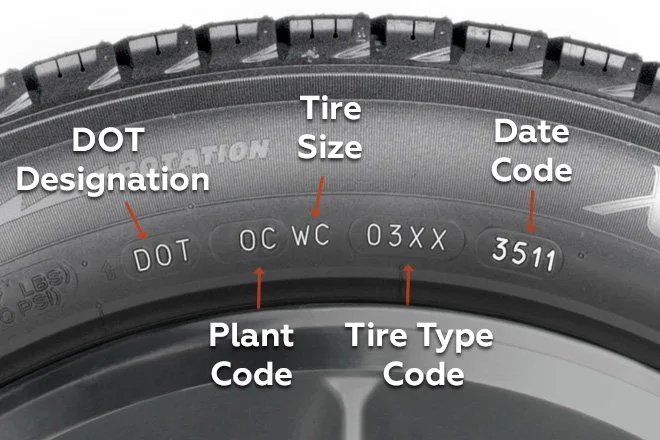
You can find the manufacturing date at the end of the tire’s DOT identification number. The final four digits show the week and year the tire was manufactured.
For example:
2324 means the tire was manufactured during the 23rd week of 2024.
There is no single replacement age that applies to every tire. Follow the tire manufacturer’s recommendations and have older tires inspected regularly by a qualified tire professional.
Remember to check the age and condition of your spare tire as well.
How to Help Your Tires Last Longer
Proper maintenance can improve tire life and help prevent uneven wear.
Check Your Tire Pressure Monthly
Use the pressure shown on the sticker inside the driver’s door or in the owner’s manual. Do not use the maximum pressure molded into the tire’s sidewall as your normal inflation setting.
Check pressure when the tires are cold, preferably before driving or after the vehicle has been parked for several hours.
Rotate Your Tires Regularly
Regular rotation helps distribute wear among all four tires. Follow the schedule in your owner’s manual or the recommendation provided by your tire manufacturer.
Have Alignment Problems Corrected
Have the alignment inspected if the vehicle pulls to one side, the steering wheel is off-center, or the tires are wearing unevenly.
Inspect Your Tires Before Longer Trips
Look for low tread, embedded objects, cracking, bulges, and low pressure before taking a road trip. NHTSA recommends inspecting tires at least monthly and before long-distance travel.
Should You Replace Two Tires or All Four?
The answer depends on the vehicle, drivetrain, tread difference, and overall condition of the remaining tires.
When only two tires are being replaced, the tires with the greatest tread depth are generally installed on the rear axle to improve vehicle stability on wet roads.
All-wheel-drive vehicles may have stricter limits on the allowable tread-depth difference between tires. Always check the vehicle manufacturer’s recommendations before replacing only one or two tires.
Do Not Wait for a Blowout
Waiting until a tire is completely worn out can leave you stranded and may put you, your passengers, and other drivers at risk.
Have your tires inspected when you notice:
Low or uneven tread
Cracks, cuts, or bulges
Frequent pressure loss
New vibrations
Reduced traction
Older tire manufacturing dates
A professional inspection can help determine whether the tire can be repaired, needs maintenance, or should be replaced.
Need New Tires Without Visiting a Tire Shop?
Veterans Mobile Tire Service brings professional tire service directly to your home, workplace, or roadside location.
Our mobile service vehicles are equipped to install and balance tires on-site, helping you avoid waiting rooms, towing expenses, and unnecessary vehicle downtime.
Contact Veterans Mobile Tire Service today to schedule a tire inspection, repair, or replacement in Jacksonville and the surrounding Northeast Florida area.
Built on integrity. Driven by service. Focused on you.
When Should You Replace Your RV Tires?
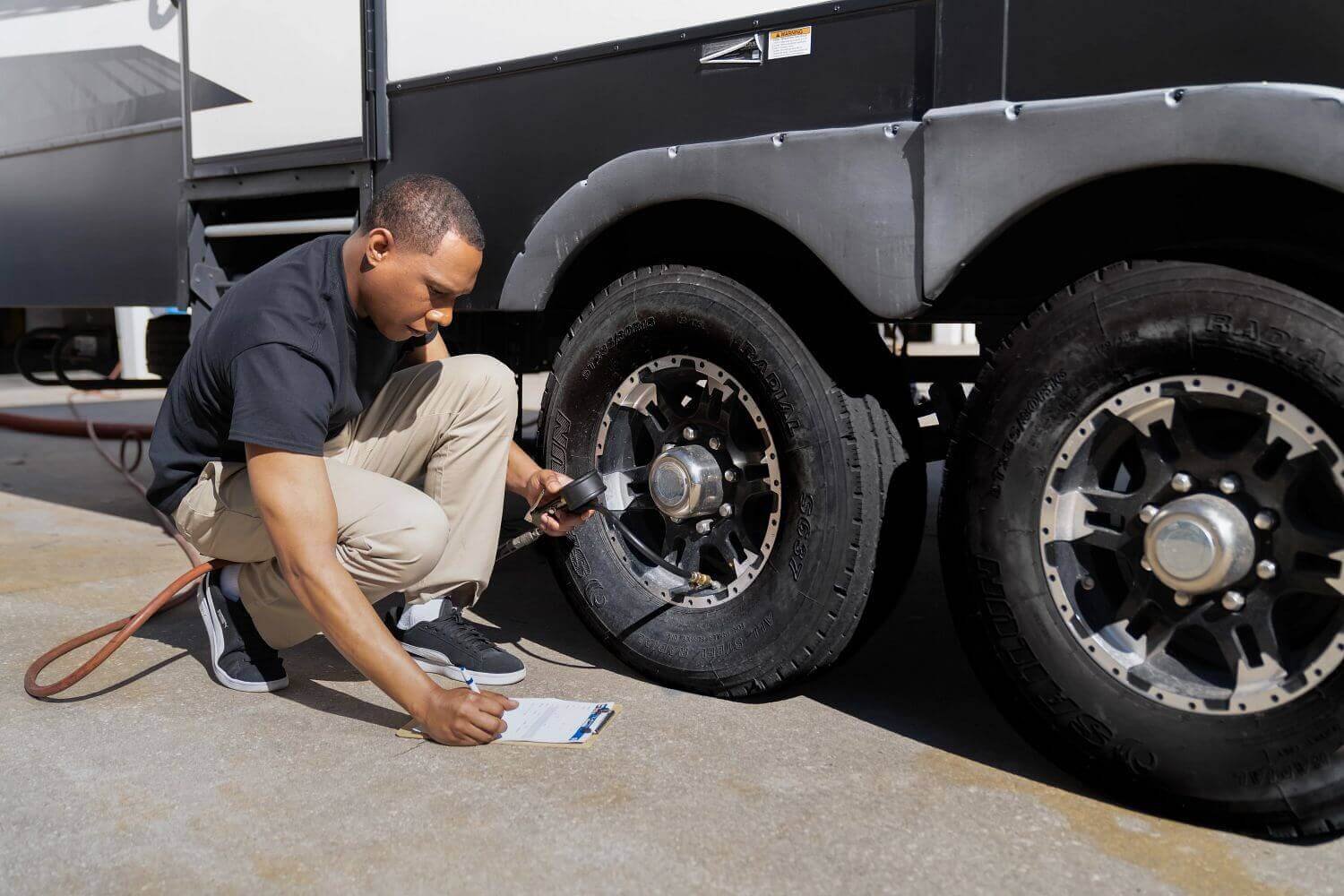
RV tires often need to be replaced before the tread is completely worn out. Unlike tires on a daily-driven vehicle, RV tires may spend weeks or months parked in one place. During that time, age, sunlight, heat, improper inflation, heavy loads, and long periods of inactivity can weaken the tires.
This is particularly important for RV owners in Florida. The National Highway Traffic Safety Administration warns that sunlight, warmer climates, poor storage, and infrequent use can contribute to tire aging. It also notes that tire aging can be a greater concern in southern Sun Belt states.
Before taking your motorhome, travel trailer, or fifth wheel on its next trip, check for these seven signs that your RV tires may need to be replaced.
1. Your RV Tires Are Reaching Their Age Limit
RV tires can look nearly new while still being too old for reliable highway use. Rubber compounds gradually deteriorate over time, even when the RV is stored and the tires have plenty of tread remaining.
NHTSA reports that some vehicle and tire manufacturers recommend replacing tires when they are approximately six to ten years old, regardless of tread depth. Michelin recommends that tires receive a professional inspection every year after five years of service and be replaced as a precaution once they reach ten years from the manufacture date. Always follow the recommendations provided by your RV and tire manufacturers.
Age alone does not tell the entire story. An RV tire exposed to Florida heat, direct sunlight, overloading, low pressure, or extended storage may need replacement sooner.
2. The Sidewalls Are Cracked or Dry-Rotted
Small surface marks can eventually develop into deeper cracking as the tire ages. Inspect both the inside and outside sidewalls for:
Cracks between the tread blocks
Dry or brittle-looking rubber
Splits around the lettering
Cracking near the wheel or bead
Exposed cords or internal material
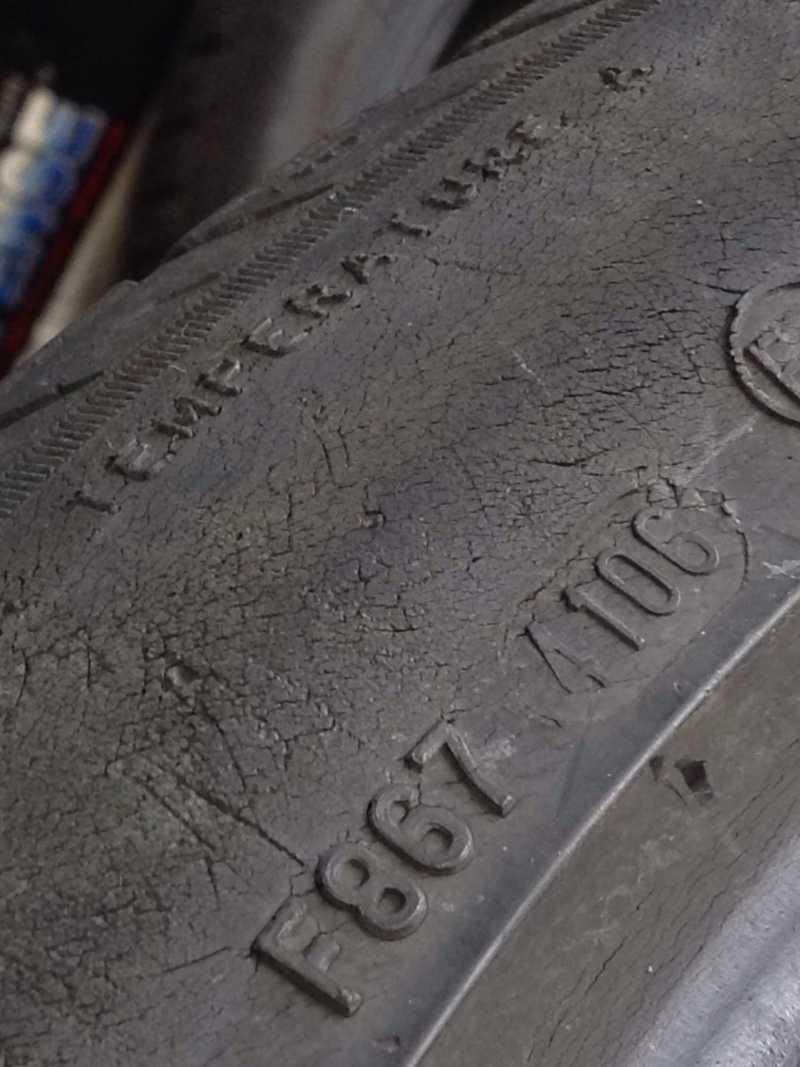
Do not assume that minor-looking damage is harmless. The outside appearance of a tire cannot reveal every form of internal deterioration. Any questionable cracking should be inspected by a qualified tire professional before the RV is driven at highway speeds.
3. You See a Bulge, Bubble, or Distorted Area
A bulge or bubble usually indicates that the tire’s internal structure has been damaged. This type of damage can result from an impact, overloading, underinflation, or internal separation.
A tire with a visible bulge should not remain in service. It can fail without much additional warning, especially under the heat and load created during highway travel.
Check the entire circumference of each tire, including the inner sidewall. On dual-wheel motorhomes, damage between the paired tires can be easy to miss without a thorough inspection.
4. The Tread Is Worn or Uneven
Tread depth still matters, even though age is frequently the deciding factor for RV tire replacement. NHTSA advises replacing tires when the tread reaches 2/32 of an inch or becomes level with the built-in treadwear indicators.
RV tires should also be inspected for uneven wear, including:
Excessive wear on one shoulder
Wear on both outside edges
Wear down the center
Cupping or scalloped areas
Flat spots from extended storage
Different wear patterns between dual tires
Uneven tread wear may point to incorrect inflation, alignment problems, suspension wear, mismatched tires, overloading, or an improper tire size or load rating. Replacing the tire without correcting the underlying cause may allow the same problem to damage the new tire.
5. A Tire Continually Loses Air Pressure
A tire that repeatedly needs air may have more than a simple puncture. Pressure loss can come from:
A leaking valve stem
A damaged wheel
A bead leak
A nail or other puncture
Cracking around the valve or sidewall
Internal tire damage
NHTSA recommends checking tire pressure at least monthly while the tires are cold. For an RV, pressure should also be checked before every major trip and after the vehicle has been stored. The correct pressure should be based on the RV manufacturer’s specifications, the actual weight being carried, and the tire manufacturer’s load-and-inflation information—not simply the maximum pressure printed on the tire’s sidewall.
Never ignore repeated pressure loss. Underinflation increases tire flexing and heat buildup, which can contribute to internal damage and tire failure.
6. You Notice Vibration, Noise, or Changes in Handling
New vibration, unusual road noise, pulling, or changes in handling can indicate a tire or wheel problem. Possible causes include:
Tire separation
An out-of-round tire
Uneven tread wear
Wheel imbalance
A bent wheel
Incorrect tire pressure
Suspension or alignment problems
NHTSA recommends having tires checked when they stop maintaining pressure or produce unexplained noise or vibration.
Do not continue driving an RV at highway speed when it develops a sudden vibration. Reduce speed safely, pull over in an appropriate location, and inspect the tires or contact a professional mobile tire service.
7. The Tire Has Been Overloaded or Driven While Underinflated
RV tires carry significant weight. Water tanks, fuel, passengers, generators, tools, food, personal belongings, towing equipment, and aftermarket accessories can all increase the load placed on the tires.
A tire may be overloaded even when the RV’s total weight appears to be within its overall limit. Weight is not always distributed evenly between axles or from one side of the RV to the other.
Driving while overloaded or underinflated can generate excessive heat and damage a tire internally. Even after the air pressure is corrected, the tire may no longer be safe. A professional inspection is recommended whenever an RV tire has been driven significantly underinflated or exposed to a known overload.
How to Read the DOT Date Code on an RV Tire
The DOT Tire Identification Number is molded into the tire’s sidewall. The final four digits identify the week and year the tire was manufactured.
For example:
DOT code ending in 1822 = manufactured during the 18th week of 2022.
You may need to inspect both sides of the tire because the complete DOT number is not always printed on the outward-facing side.
Check every tire individually. Do not assume all tires are the same age simply because they were installed at the same time. Replacement tires may have been manufactured in different weeks or even different years.
Do Not Forget the Spare Tire
An RV’s spare tire may be one of the oldest tires on the vehicle. Because it is rarely used, it can retain deep tread while the rubber continues to age.
Inspect the spare for:
Its DOT manufacture date
Proper inflation
Sidewall cracking
Valve-stem deterioration
Water or sun damage
Damage from its mounting location
NHTSA warns that spare tires are also subject to aging, even when they have rarely or never been used.
Should All RV Tires Be Replaced at the Same Time?
Replacing a complete set is often appropriate when all the tires are the same age and have experienced similar conditions. However, the correct decision depends on the tire type, axle position, tread depth, size, load rating, and condition of the remaining tires.
On dual-wheel motorhomes, paired tires should be properly matched. Differences in size, inflation, construction, or remaining tread can cause one tire to carry more of the load. A qualified tire professional can determine whether one tire can be replaced safely or whether multiple tires should be replaced together.
Have Your RV Tires Inspected Before Your Next Trip
A tire failure on an RV can damage more than the tire. A blown tire may damage body panels, plumbing, wiring, wheel wells, suspension components, or the underside of the vehicle. A professional inspection before a long trip can identify many problems before they become roadside emergencies.
Veterans Mobile Tire Service provides mobile RV tire inspection and replacement services throughout Jacksonville and surrounding Northeast Florida communities. We service motorhomes, travel trailers, fifth wheels, toy haulers, and other recreational vehicles at your home, storage facility, campground, or roadside location.
Instead of driving your RV to a traditional tire shop, our mobile tire service comes directly to you.
Contact Veterans Mobile Tire Service today to schedule an RV tire inspection or request mobile RV tire replacement in the Jacksonville area.
Can a Flat Tire Be Repaired? Here's How to Tell
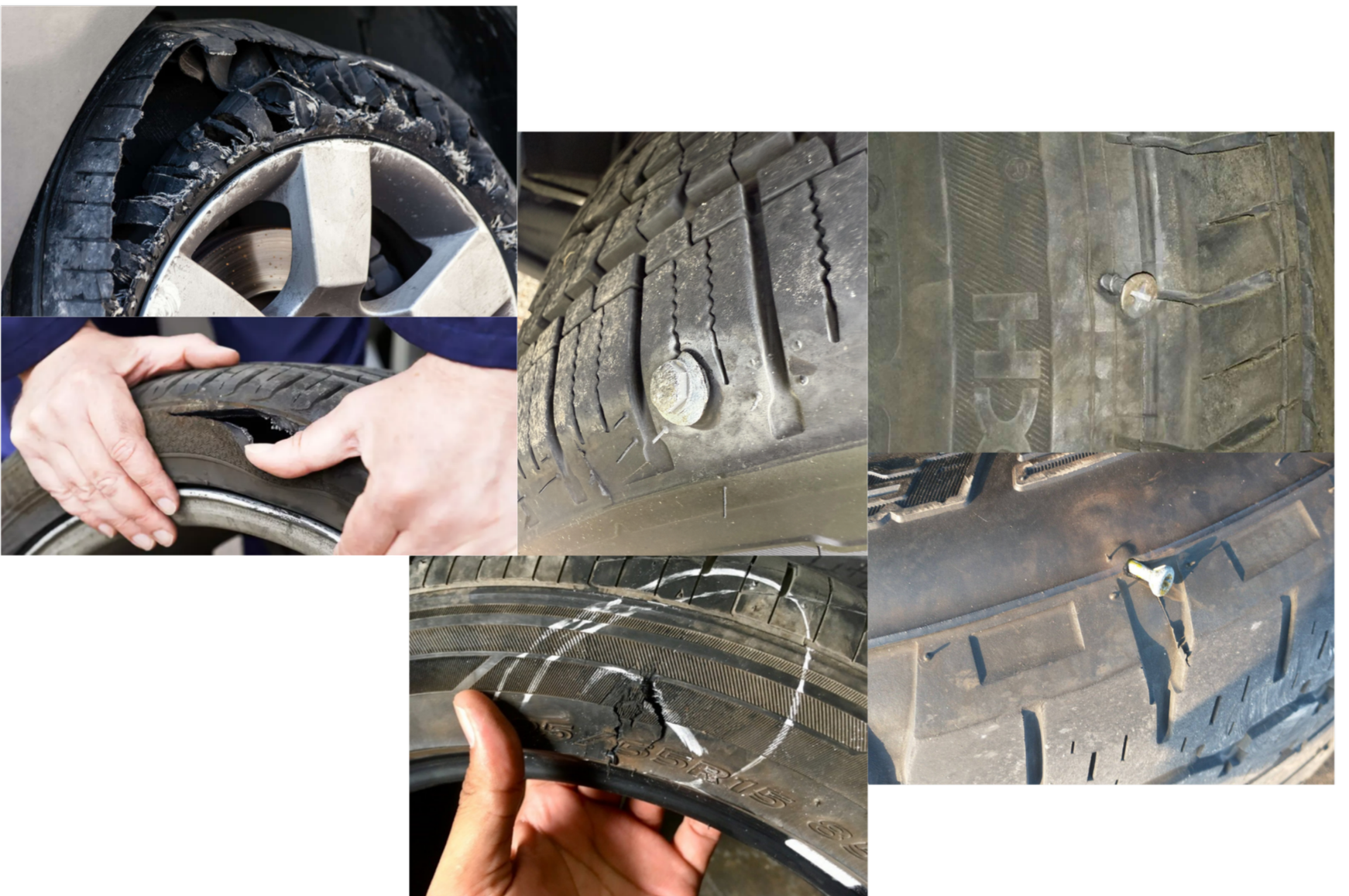
One of the most common questions we hear is, "Can my tire be repaired, or do I need a new one?"
The answer depends on several factors, including where the tire was damaged, how large the puncture is, and whether the tire has been driven while flat. While some punctures can be repaired safely, others require replacement to keep you and your passengers safe.
At Veterans Mobile Tire Service, every tire is inspected before we recommend a repair or replacement. Our goal is to save you money whenever it's safe to do so—but we'll never recommend a repair that compromises your safety.
When a Tire Can Usually Be Repaired
Most repairable tire damage involves a small puncture in the tread caused by a nail or screw.
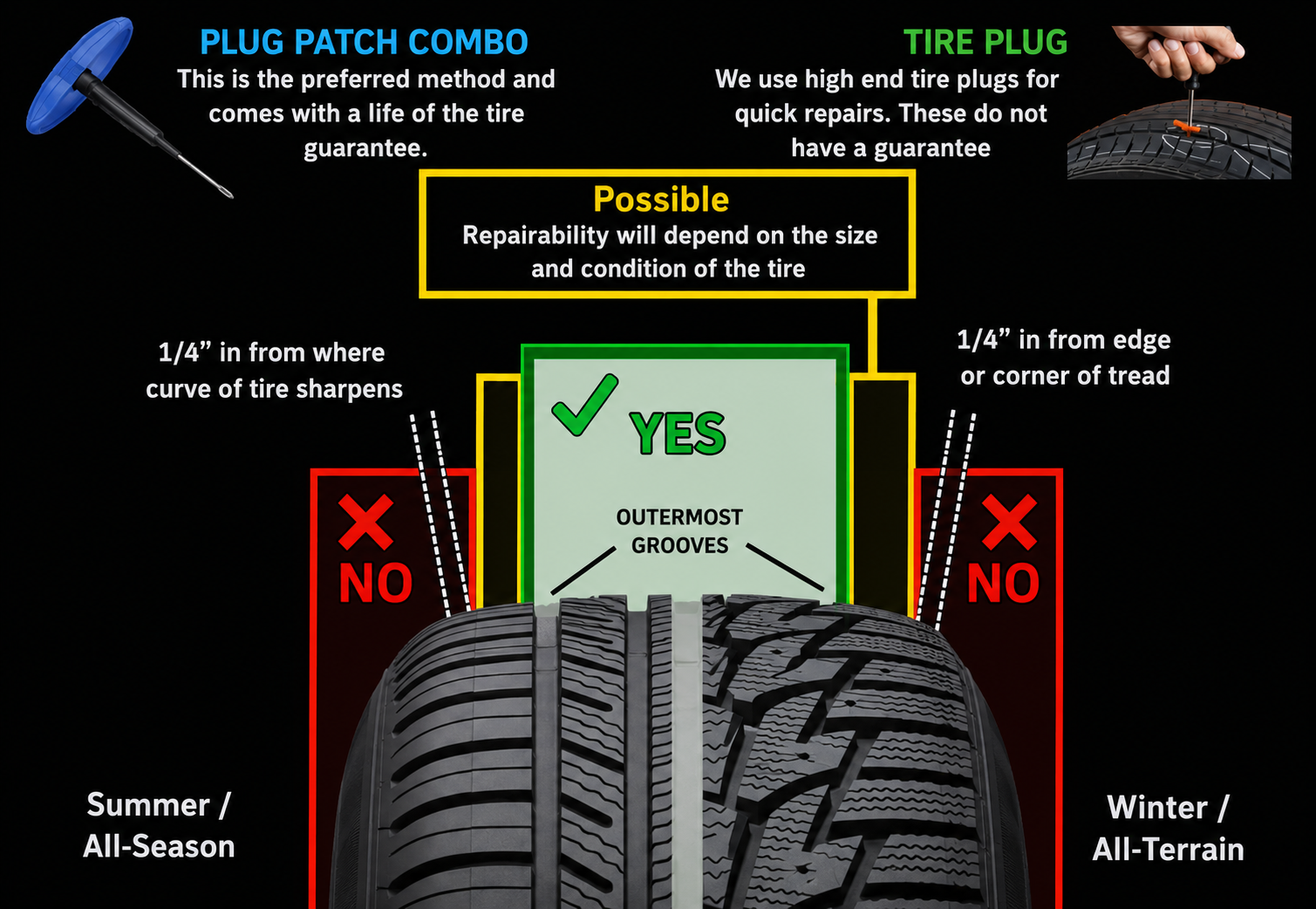
Generally, a tire may be repairable if:
The puncture is located in the center tread area.
The hole is 1/4 inch (6 mm) in diameter or smaller.
The tire hasn't been driven while completely flat.
There is no internal structural damage.
The tire still has safe tread depth remaining.
When these conditions are met, the proper repair is a combination plug-and-patch installed from the inside of the tire. This seals the puncture and restores the tire's integrity far better than an external plug alone.
When a Tire Cannot Be Repaired
Unfortunately, not every flat tire can be safely fixed.
A replacement is usually necessary if:
The damage is in the sidewall.
The puncture is too large.
The tire has multiple punctures close together.
The belts or cords inside the tire are damaged.
The tire has been driven while flat, causing internal damage.
The tread is already worn below safe limits.
Even if a tire still holds air after being driven on while flat, hidden internal damage can lead to a sudden failure later.
Is It Safe to Use Tire Sealant?
Emergency tire sealants can help get you off the road, but they should only be considered temporary solutions.
Many sealants:
Make permanent repairs more difficult.
Can interfere with TPMS sensors.
May create a mess inside the tire.
Do not fix the underlying damage.
If you've used tire sealant, let your technician know before the tire is dismounted.
Should You Install the Spare Tire?
If your vehicle has a usable spare tire, installing it is often the safest way to continue driving until the damaged tire can be properly inspected.
Keep in mind that many newer vehicles use temporary "donut" spare tires, which typically have speed and distance limitations. Always follow the manufacturer's recommendations.
Why Professional Inspection Matters
From the outside, two flat tires may look identical. However, internal damage isn't always visible.
Professional inspection allows a technician to:
Remove the tire from the wheel.
Inspect the inside liner.
Check for sidewall flex damage.
Verify the puncture location.
Determine whether the tire meets industry repair standards.
This ensures that any repair performed is both safe and reliable.
Mobile Tire Repair at Your Location
One of the biggest advantages of mobile tire service is convenience.
Instead of arranging a tow or waiting hours at a tire shop, Veterans Mobile Tire Service comes directly to your:
Home
Workplace
Office parking lot
Job site
Roadside location (where safe to perform service)
Our fully equipped service vehicles can inspect, repair, mount, and computer-balance tires on-site, helping you get back on the road quickly.
Trust Safety Over Convenience
It's understandable to want to repair every flat tire and avoid the cost of replacement. However, some damage simply can't be repaired safely.
At Veterans Mobile Tire Service, we follow accepted tire repair standards and provide honest recommendations based on the condition of your tire—not on selling unnecessary replacements.
If your tire can be repaired safely, we'll do it. If it can't, we'll explain why and help you choose the best replacement option for your vehicle.
Need a Tire Inspection or Repair?
If you've picked up a nail, noticed low tire pressure, or aren't sure whether your tire can be repaired, contact Veterans Mobile Tire Service. We provide professional mobile tire repair and replacement throughout Jacksonville and the surrounding Northeast Florida communities, bringing the tire shop directly to your home, workplace, or roadside location.
What to Do If You Get a Flat Tire in Jacksonville: A Step-by-Step Guide
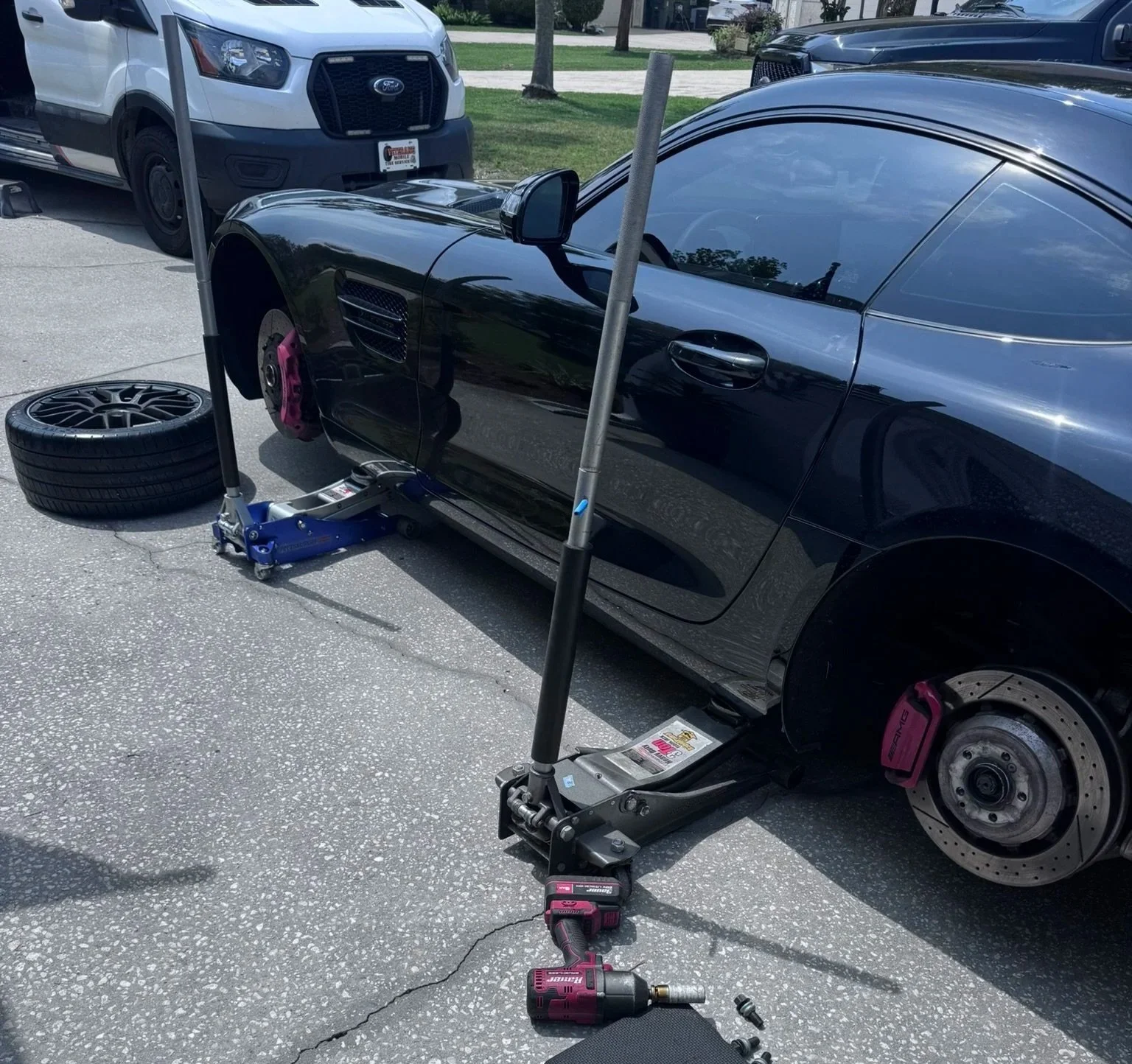
Few things are more frustrating than walking out to your vehicle or driving down the road and discovering you have a flat tire. Whether you're heading to work, picking up the kids, or making deliveries, a flat tire can quickly disrupt your day.
The good news is that you don't always have to tow your vehicle to a tire shop. Mobile tire service allows the repair or replacement to come directly to you.
Step 1: Get to a Safe Location
If you're driving when the tire goes flat, avoid slamming on the brakes. Reduce your speed gradually, turn on your hazard lights, and move to a safe location away from traffic whenever possible.
If you're already parked when you discover the flat, avoid driving on it unless absolutely necessary. Driving on a flat tire can damage the wheel and make a simple repair impossible.
Step 2: Inspect the Tire
Take a quick look to determine the cause of the flat.
Nails or screws
Sidewall damage
Pothole impacts
Valve stem leaks
Worn-out tread
If the damage is in the tread area, the tire may be repairable. Sidewall damage, large punctures, or tires that have been driven while flat usually require replacement.
Step 3: Decide Whether It's Safe to Change the Tire Yourself
Changing a tire on the side of the road isn't always the safest option.
Consider these factors:
Heavy traffic
Poor weather
Soft or uneven ground
Limited lighting
Lack of proper tools
If any of these apply, it's often safer to call a professional mobile tire service.
Step 4: Know Your Options
Depending on the condition of the tire, you may have several options:
Professional Tire Repair
If the puncture is repairable, a proper plug-and-patch repair can safely return the tire to service.
Tire Replacement
If the tire cannot be repaired, replacing it is the safest solution. Matching the correct size, load rating, and speed rating is important for your vehicle's performance and safety.
Spare Tire Installation
If you have a usable spare, it can be installed so you can continue your trip until a permanent repair or replacement is completed.
Why Choose Mobile Tire Service?
Traditional tire shops often require scheduling an appointment, waiting in line, or arranging a tow.
A mobile tire service brings the shop to your location, whether you're:
At home
At work
Stuck on the roadside
Managing a fleet vehicle
At a job site
This saves time, reduces downtime, and eliminates the hassle of waiting at a repair shop.
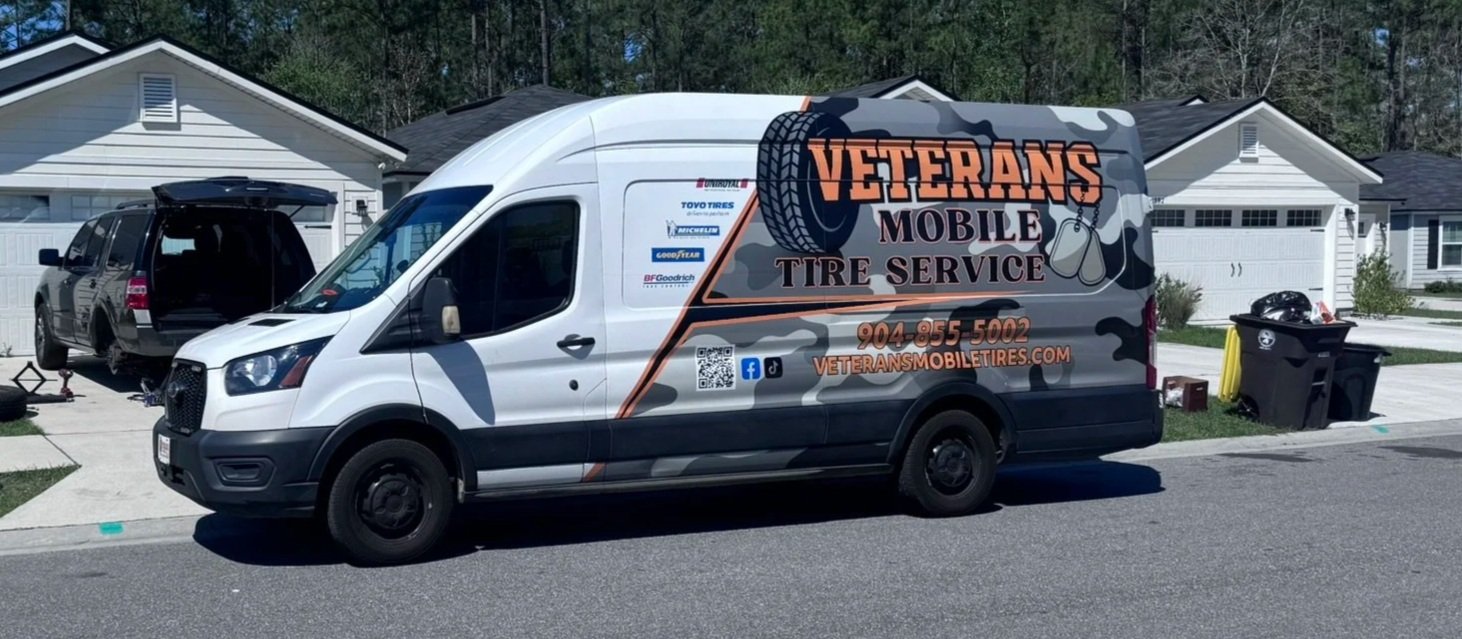
Serving Jacksonville and Northeast Florida
Veterans Mobile Tire Service provides professional mobile tire services throughout Jacksonville and the surrounding areas. Our service vehicles are equipped with commercial-grade tire mounting and computer balancing equipment, allowing us to perform many of the same services offered by a traditional tire shop—right at your location.
We service:
Passenger cars
SUVs
Pickup trucks
Vans
Commercial vehicles
Fleet vehicles
RVs
Trailers
Whether you need a tire repaired, replaced, balanced, or simply mounted on-site, our goal is to get you back on the road quickly and safely.
Need Help With a Flat Tire?
If you've experienced a flat tire in Jacksonville or the surrounding area, don't risk driving on a damaged tire or waiting hours for a tow. Veterans Mobile Tire Service brings professional tire service directly to you, saving you time while providing reliable, high-quality workmanship.
Contact Veterans Mobile Tire Service today to schedule same-day mobile tire service and let us bring the tire shop to your driveway, workplace, or roadside location.