
When Should You Replace Your Tires? 7 Warning Signs Every Driver Should Know
Your tires are the only parts of your vehicle that make direct contact with the road. Their condition affects braking, steering, fuel efficiency, ride quality, and your ability to maintain control during heavy rain or an emergency maneuver.
Unfortunately, many drivers wait until a tire is completely bald or goes flat before considering replacement. Tires usually provide several warning signs before they become unsafe. Knowing what to look for can help you avoid unexpected breakdowns, poor traction, and costly vehicle damage.
Here are seven common signs that it may be time to replace your tires.
1. Your Tread Is Too Low
Tire tread channels water away from the tire and helps your vehicle maintain traction. As the tread wears down, your stopping distance can increase, especially on wet roads.
The minimum recommended tread depth is 2/32 of an inch. Tires that have reached this level should be replaced.
You can perform a quick check using a penny:
Place a penny into one of the main tread grooves.
Turn the penny so Abraham Lincoln’s head points down.
If you can see the top of Lincoln’s head, the tread is approximately 2/32 of an inch or less.
Tires also have built-in tread-wear bars inside the grooves. When these bars become level with the surrounding tread, the tire has reached its replacement point.
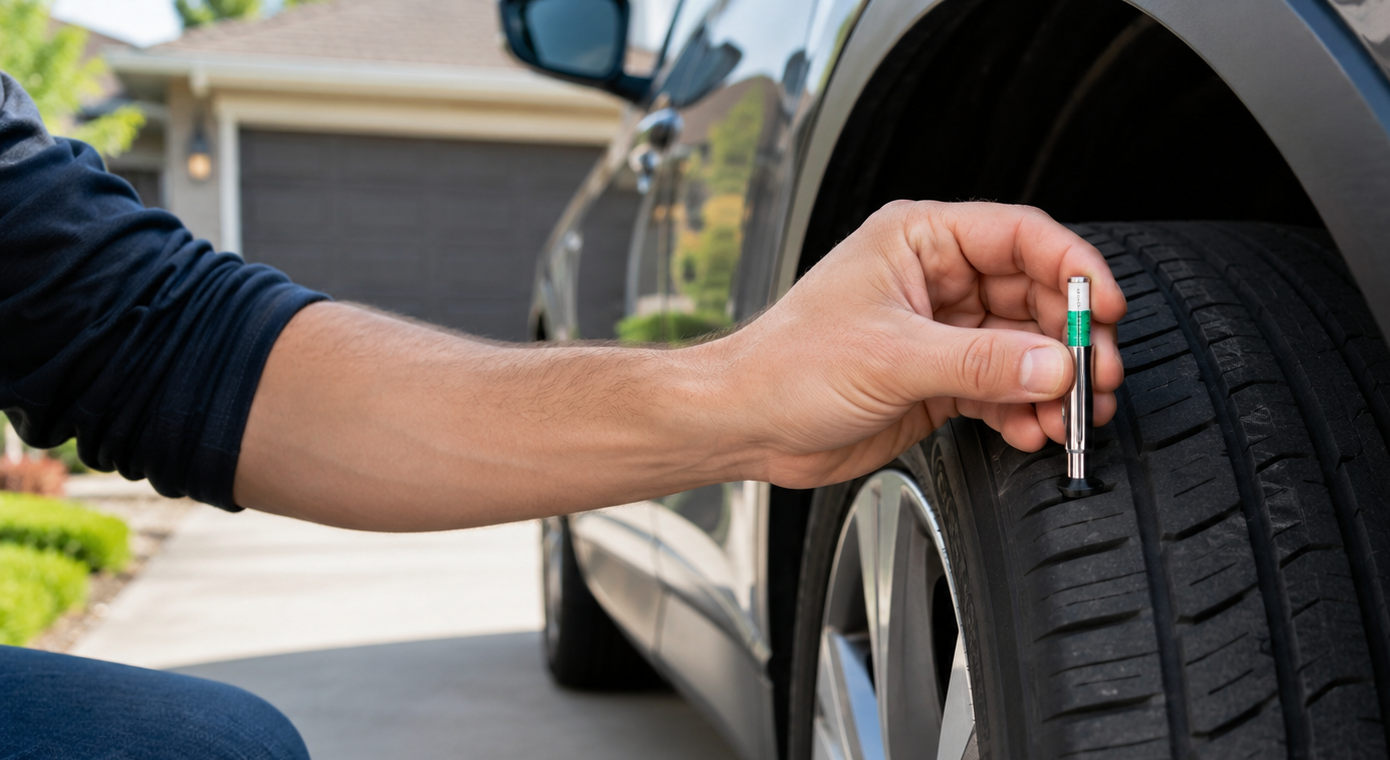
In areas that experience frequent heavy rain, replacing your tires before they reach the absolute minimum can provide better wet-weather traction.
2. You See Cracks, Cuts, or Bulges
Inspect both the tread and sidewalls for visible damage. Warning signs include:
Deep cuts or punctures
Cracking or dry rot
Bubbles or bulges
Exposed cords or belts
Pieces of tread separating from the tire
A bulge or bubble usually indicates damage inside the tire. This type of damage cannot be safely repaired and may lead to a sudden blowout.
The National Highway Traffic Safety Administration recommends discontinuing the use of tires showing physical damage such as cuts, cracks, bulges, or irregular wear.
Do not drive on a tire with a visible bulge or exposed internal material. Install the spare tire or arrange professional roadside service.
3. Your Tires Are Wearing Unevenly
Tire tread should wear relatively evenly across the surface. If one section is significantly more worn than another, there may be a problem with:
Wheel alignment
Tire pressure
Suspension components
Tire rotation intervals
Wheel balancing
Wear along both outer edges can indicate underinflation. Excessive wear through the center may indicate overinflation. Wear on only one side commonly points to an alignment or suspension problem.
Replacing the tire without correcting the underlying issue may cause the new tire to wear out prematurely.
4. Your Tires Are Losing Air Repeatedly
Tire pressure naturally changes with temperature, but a tire that requires air every few days or weeks may have a leak.
Common causes include:
A nail or screw in the tread
A leaking valve stem
Corrosion around the wheel bead
A cracked wheel
Damage to the tire’s inner liner
Some tread-area punctures can be repaired with a proper internal patch-and-plug combination. However, punctures in the sidewall or shoulder generally require tire replacement.
A tire pressure warning light should not be ignored. The Tire Pressure Monitoring System is designed to alert you when a tire is already significantly underinflated, but it does not replace routine checks with an accurate tire-pressure gauge.
5. Your Vehicle Vibrates While Driving
A vibration through the steering wheel, seat, or floor can sometimes be caused by a wheel that needs balancing. It can also indicate:
Internal tire separation
An out-of-round tire
Uneven tread wear
A bent wheel
Suspension or alignment problems
A vibration that begins suddenly or becomes worse as your speed increases should be inspected promptly. Continuing to drive could cause additional tire, wheel, or suspension damage.
6. Your Tires Have Lost Wet-Weather Traction
You do not need to wait for the tread to become completely bald before replacing your tires.
You may notice that your vehicle:
Slides more easily during rain
Takes longer to stop
Spins the tires during normal acceleration
Feels unstable through standing water
Activates traction control more frequently
These symptoms can indicate that the remaining tread is no longer moving water away effectively.
Because Jacksonville and Northeast Florida can experience sudden, heavy rainfall, dependable wet-road traction is especially important. Tires that still appear usable in dry weather may perform poorly when the roads become wet.
7. Your Tires Are Getting Old
Tires deteriorate over time, even when they still have visible tread. Heat, sunlight, storage conditions, maintenance, and infrequent use can all affect how quickly a tire ages. NHTSA notes that tire aging is a particular concern in warmer southern regions and for vehicles that are not driven regularly.
You can find the manufacturing date at the end of the tire’s DOT identification number. The final four digits show the week and year the tire was manufactured.
For example:
2324 means the tire was manufactured during the 23rd week of 2024.
There is no single replacement age that applies to every tire. Follow the tire manufacturer’s recommendations and have older tires inspected regularly by a qualified tire professional.
Remember to check the age and condition of your spare tire as well.
How to Help Your Tires Last Longer
Proper maintenance can improve tire life and help prevent uneven wear.
Check Your Tire Pressure Monthly
Use the pressure shown on the sticker inside the driver’s door or in the owner’s manual. Do not use the maximum pressure molded into the tire’s sidewall as your normal inflation setting.
Check pressure when the tires are cold, preferably before driving or after the vehicle has been parked for several hours.
Rotate Your Tires Regularly
Regular rotation helps distribute wear among all four tires. Follow the schedule in your owner’s manual or the recommendation provided by your tire manufacturer.
Have Alignment Problems Corrected
Have the alignment inspected if the vehicle pulls to one side, the steering wheel is off-center, or the tires are wearing unevenly.
Inspect Your Tires Before Longer Trips
Look for low tread, embedded objects, cracking, bulges, and low pressure before taking a road trip. NHTSA recommends inspecting tires at least monthly and before long-distance travel.
Should You Replace Two Tires or All Four?
The answer depends on the vehicle, drivetrain, tread difference, and overall condition of the remaining tires.
When only two tires are being replaced, the tires with the greatest tread depth are generally installed on the rear axle to improve vehicle stability on wet roads.
All-wheel-drive vehicles may have stricter limits on the allowable tread-depth difference between tires. Always check the vehicle manufacturer’s recommendations before replacing only one or two tires.
Do Not Wait for a Blowout
Waiting until a tire is completely worn out can leave you stranded and may put you, your passengers, and other drivers at risk.
Have your tires inspected when you notice:
Low or uneven tread
Cracks, cuts, or bulges
Frequent pressure loss
New vibrations
Reduced traction
Older tire manufacturing dates
A professional inspection can help determine whether the tire can be repaired, needs maintenance, or should be replaced.
Need New Tires Without Visiting a Tire Shop?
Veterans Mobile Tire Service brings professional tire service directly to your home, workplace, or roadside location.
Our mobile service vehicles are equipped to install and balance tires on-site, helping you avoid waiting rooms, towing expenses, and unnecessary vehicle downtime.
Contact Veterans Mobile Tire Service today to schedule a tire inspection, repair, or replacement in Jacksonville and the surrounding Northeast Florida area.
Built on integrity. Driven by service. Focused on you.