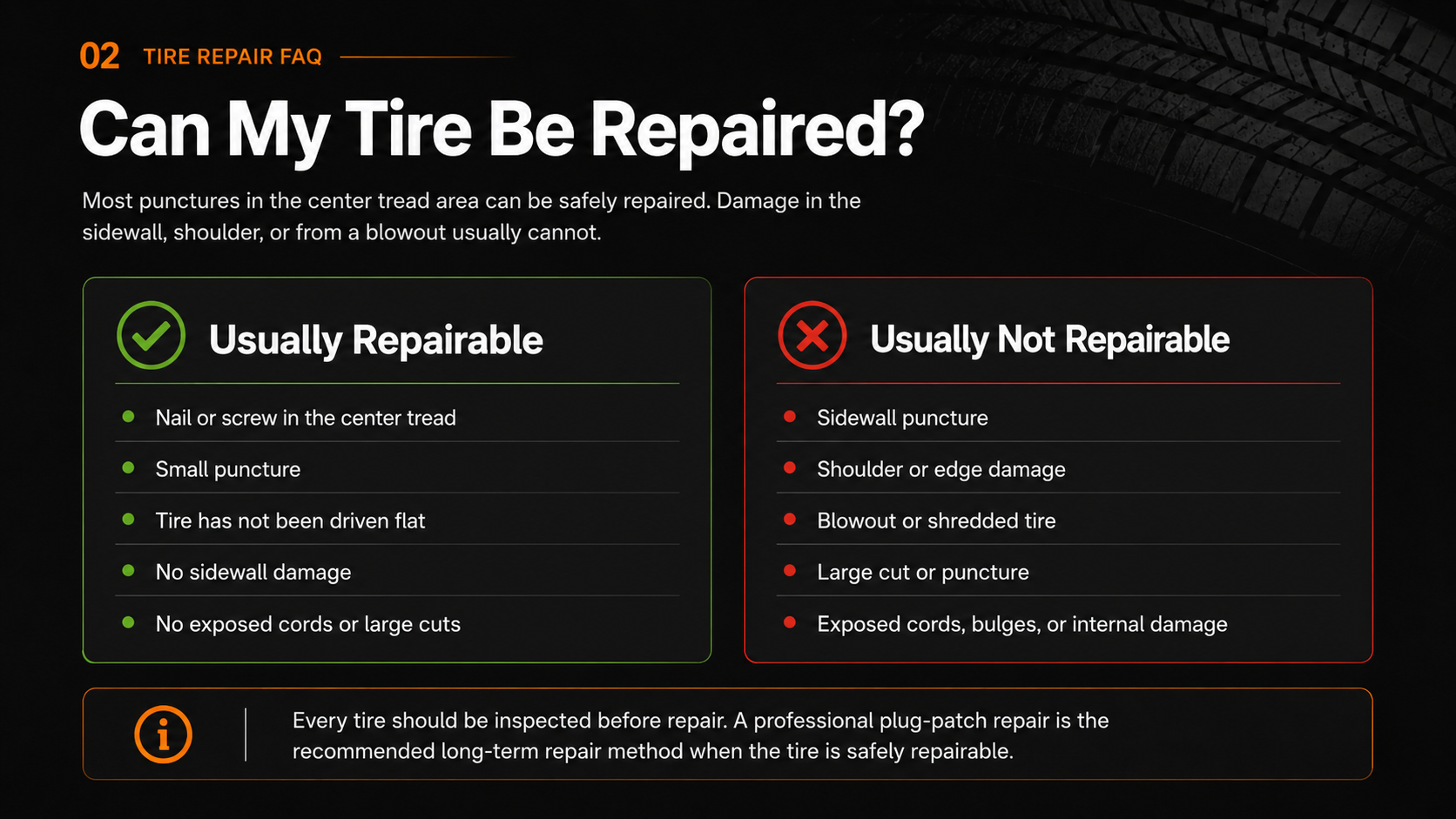
Tire repair FAQ chart showing criteria for determining if a tire can be repaired. The chart is divided into two columns: 'Usually Repairable' and 'Usually Not Repairable', with checkmarks and X marks respectively. The repairable criteria include nail or screw in the center tread, small puncture, tire not driven flat, no sidewall damage, and no large cuts or exposed cords. The non-repairable criteria include sidewall puncture, shoulder or edge damage, blowout or shredded tire, large cut or puncture, and exposed cords or internal damage.
A mechanic inspects a flat tire with a screwdriver, while wearing black gloves and a black cap, near a vehicle in a tire repair shop.
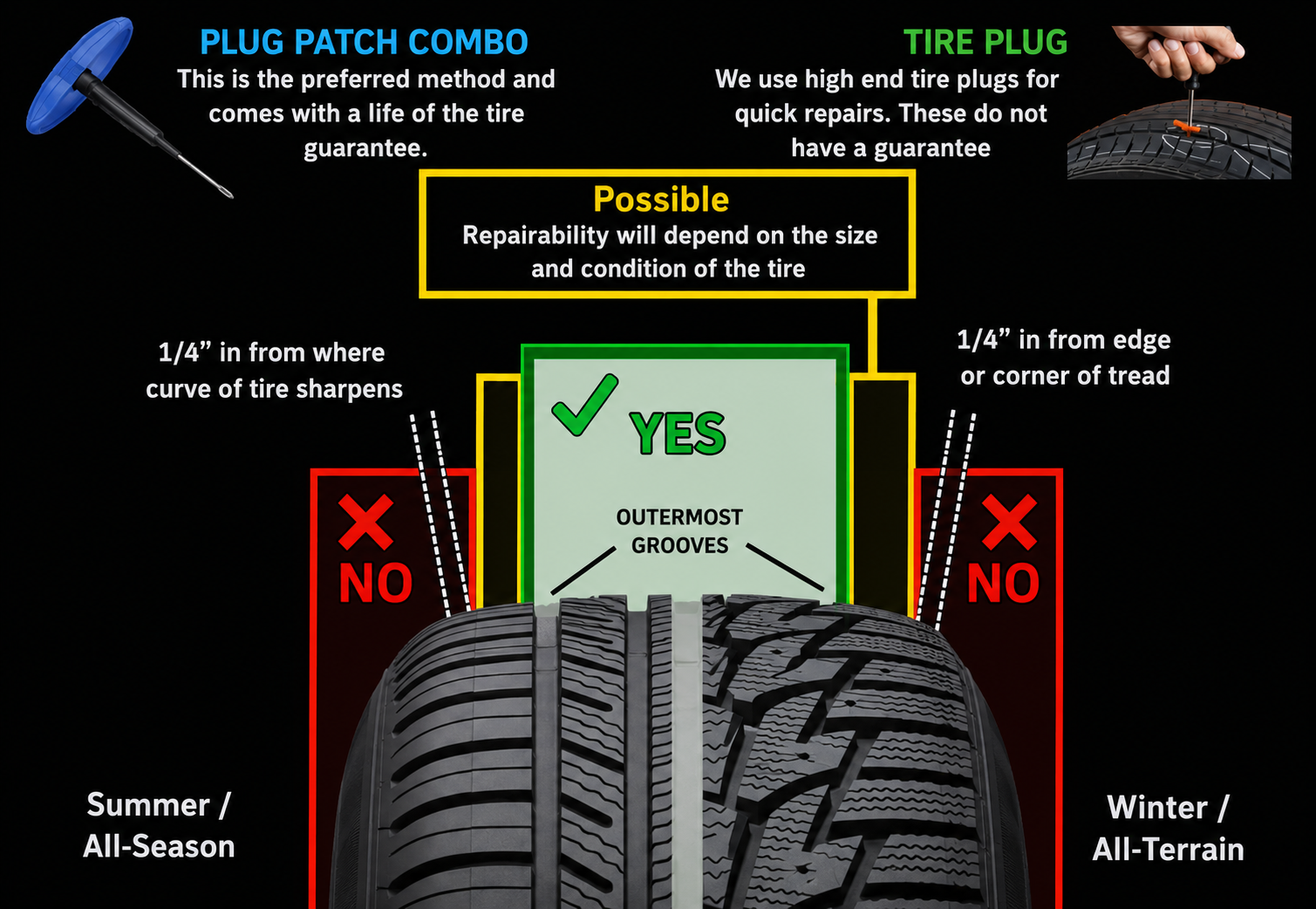
Diagram showing proper tire tread edge placement for tire repair, indicating outermost grooves are acceptable for repair, with annotations about plug patch combo, tire plug, and repair guidelines for summer and winter tires.
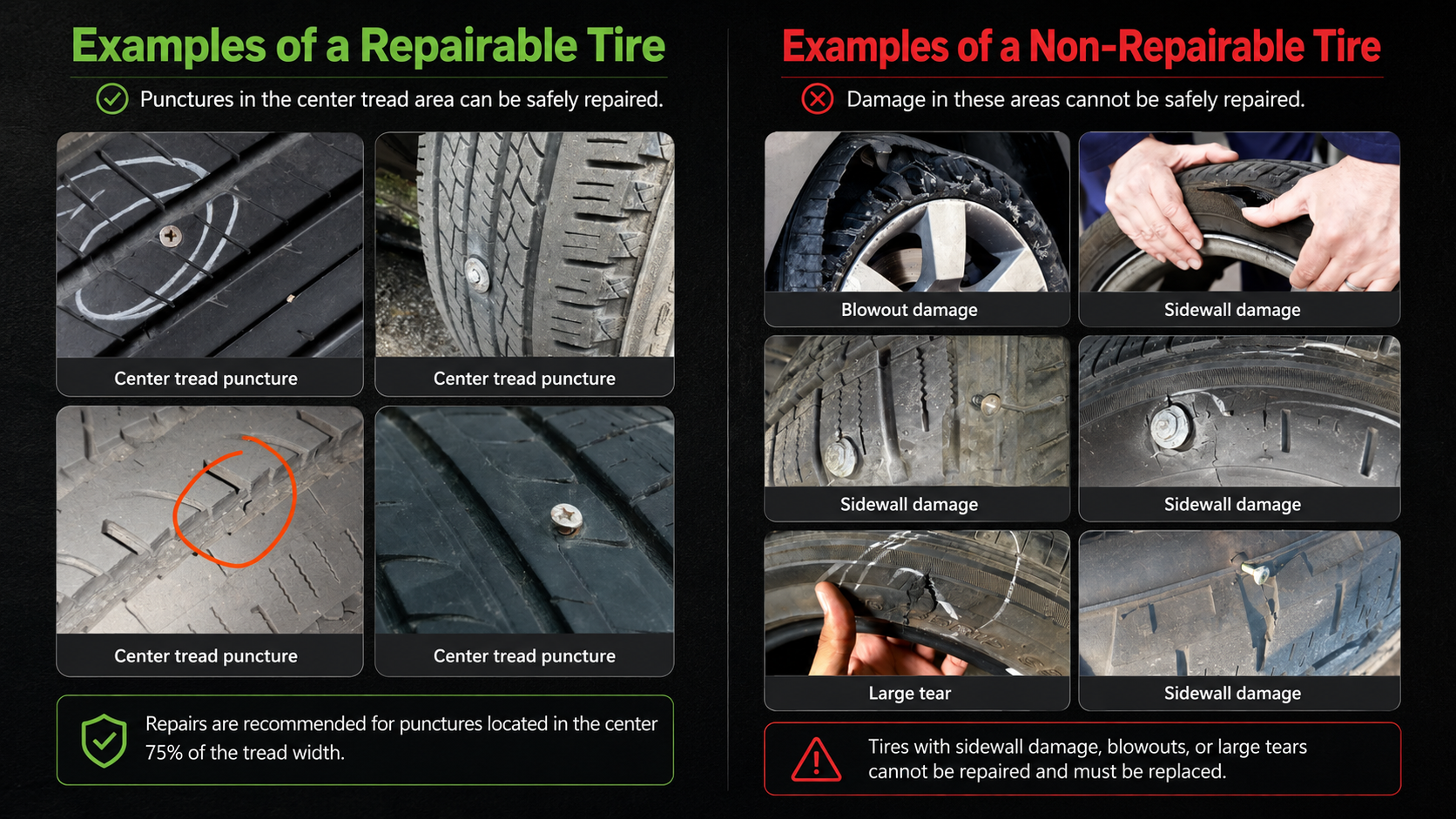
Comparison chart showing examples of repairable and non-repairable tires. The left side displays tires with center tread punctures labeled as repairable, with images of punctures in the center tread area. The right side shows tires with blowout, sidewall, or large tears labeled as non-repairable, with images of damage in the sidewall and other parts.
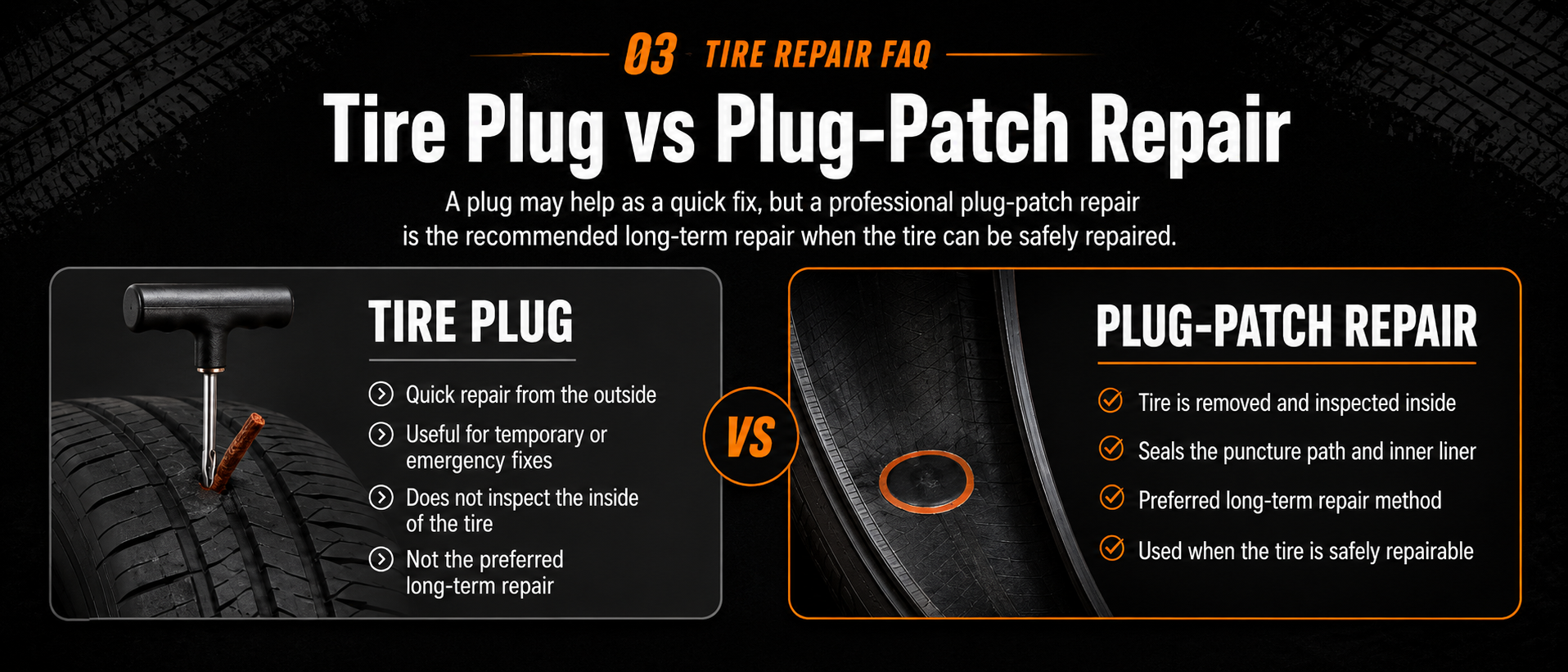
Comparison infographic explaining the differences between tire plug and plug-patch repair methods, including images of a tire with a plug being inserted and a tire with a visible puncture for patching.